

Scientists have created a four-legged bio-inspired robotic that climbs like no different. It clings to tough vertical surfaces using a novel mechanism that’s extremely efficient, but on the similar time comparatively easy.
Whereas some experimental robots make the most of suction-based greedy techniques to climb easy surfaces, such know-how would not work on tough surfaces like rock, the place a seal cannot be fashioned.
One different includes utilizing what are often known as microspine grippers. These incorporate an array of tiny sharp hooks that snag small nooks and crannies within the floor being climbed. The hooks are launched from that floor when the gripper is lifted off to take the following step up.
Some microspine grippers are passive, counting on the burden of the robotic’s hanging physique to keep up a maintain. This kind works OK on comparatively flat partitions however struggles with extra irregular surfaces reminiscent of cliff faces, which require a extra assorted climbing technique.
Lively microspine grippers get round this limitation by incorporating electrical actuators that purposefully sink a hoop of the hooks into the floor, sustaining a motorized maintain that works in any route. These are usually cumbersome, energy-hungry and mechanically complicated, nevertheless, plus they make for a reasonably gradual climbing velocity.
That is the place the LORIS quadruped robotic is available in.
Carnegie Mellon College
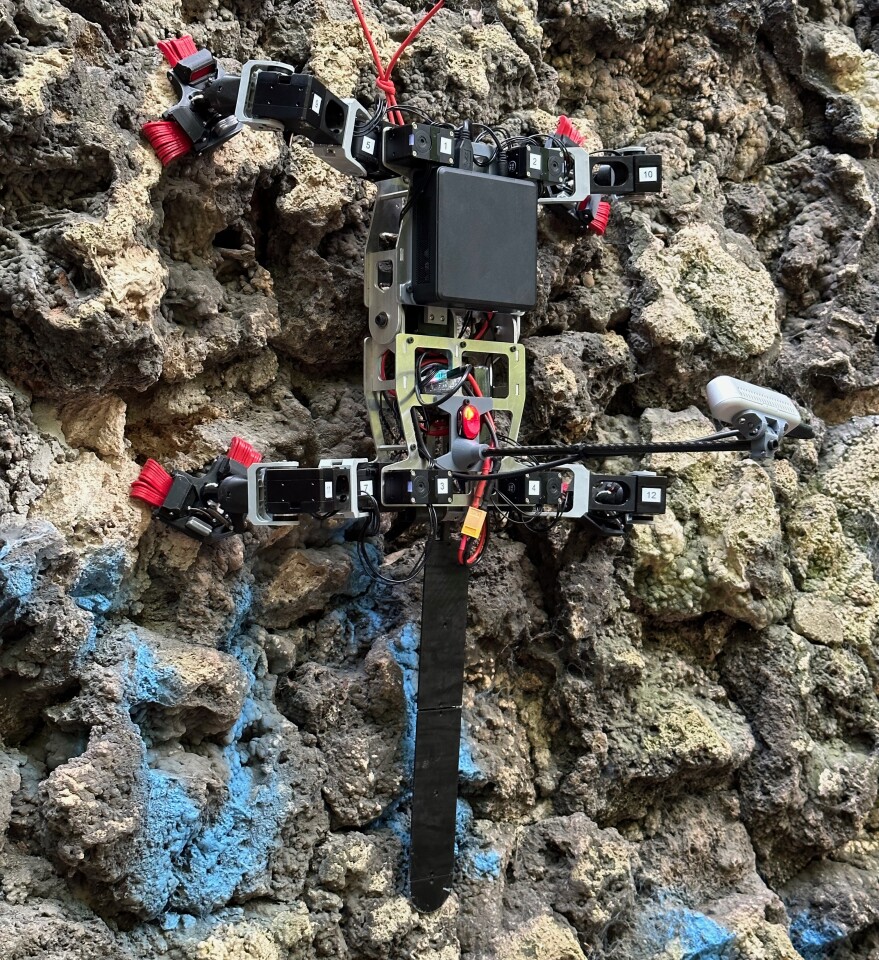
Named for a climbing marsupial – and in addition for the phrases “Light-weight Statement Robotic for Irregular Slopes” – the machine was created by Paul Nadan, Spencer Backus, Aaron M. Johnson and colleagues at Carnegie Mellon College’s Robomechanics Lab.
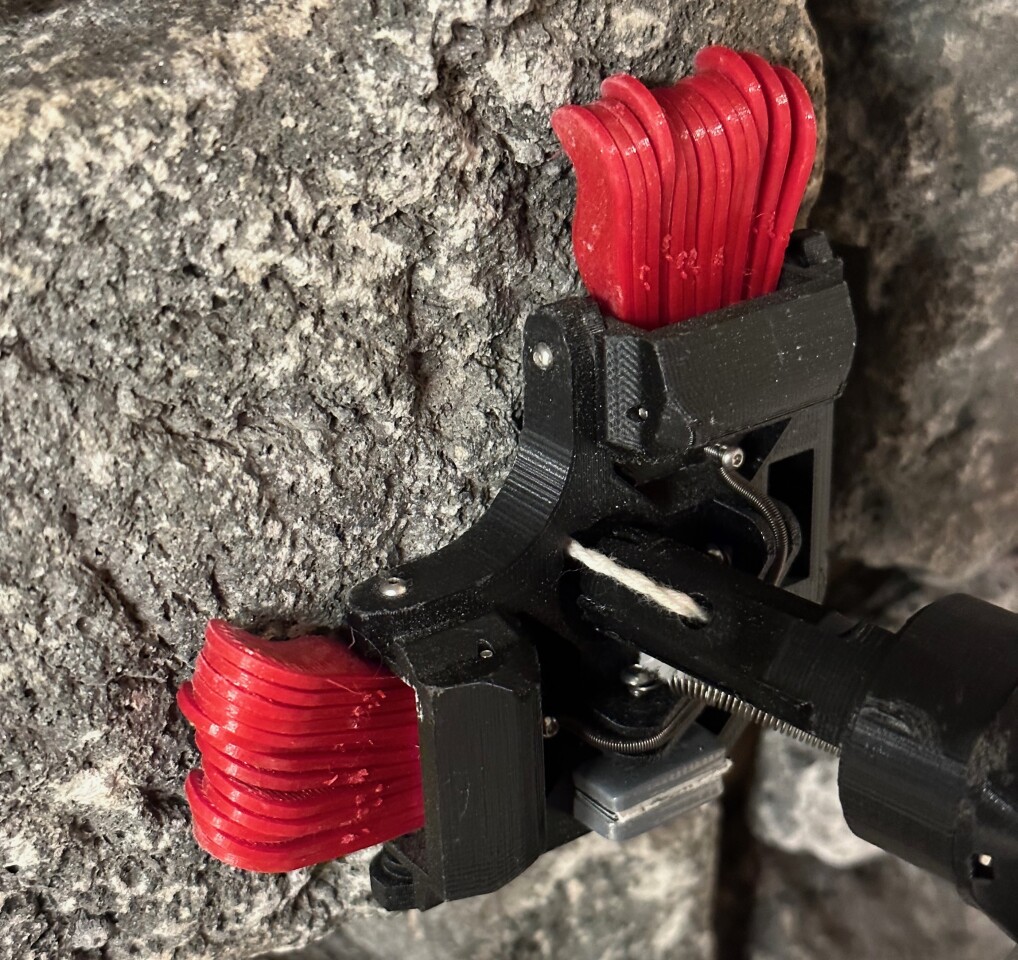
On the finish of every of the bot’s 4 legs is a splayed microspine gripper, incorporating two teams of spines organized at a proper angle to at least one one other. The gripper is linked to the leg by a passive wrist joint. This mainly implies that the gripper simply flops round in response to regardless of the leg is doing.
Carnegie Mellon College
Using an onboard depth-sensing digital camera and microprocessor, the robotic strategically advances its legs in such a fashion that when the gripper on one leg takes maintain of the climbing floor, the gripper on an opposing leg – on the opposite facet of the physique, on the different finish of the physique – additionally does so.
So long as these two diagonally opposed legs keep inward rigidity on their grippers, these grippers keep firmly connected to the floor. The robotic’s different two opposing legs, in the meantime, are free to take the following step upward. That is an insect-inspired climbing technique often known as directed inward greedy (DIG).
In line with the researchers, LORIS combines the sunshine weight, velocity, vitality effectivity and ease of passive microspine grippers with the agency maintain and flexibility of lively grippers. And as an added bonus, the robotic is designed to be straightforward and cheap to fabricate.
You may see LORIS in motion, within the video under. A paper on the research was just lately offered on the Worldwide Convention on Robotics and Automation.
LORIS: A Light-weight Free-Climbing Robotic for Excessive Terrain Exploration
Supply: Carnegie Mellon College